Blackwork Tattoo Style
What defines the blackwork tattoo style?
The blackwork tattoo style uses black ink as its primary visual material. Solid shapes, heavy silhouettes, graphic linework, stippling, and untouched skin create the image. Some blackwork tattoos are dense and dramatic; others are intricate, decorative, or surprisingly airy. What unites them is a commitment to contrast. Color is not needed because the relationship between black and negative space provides the structure, mood, and movement.
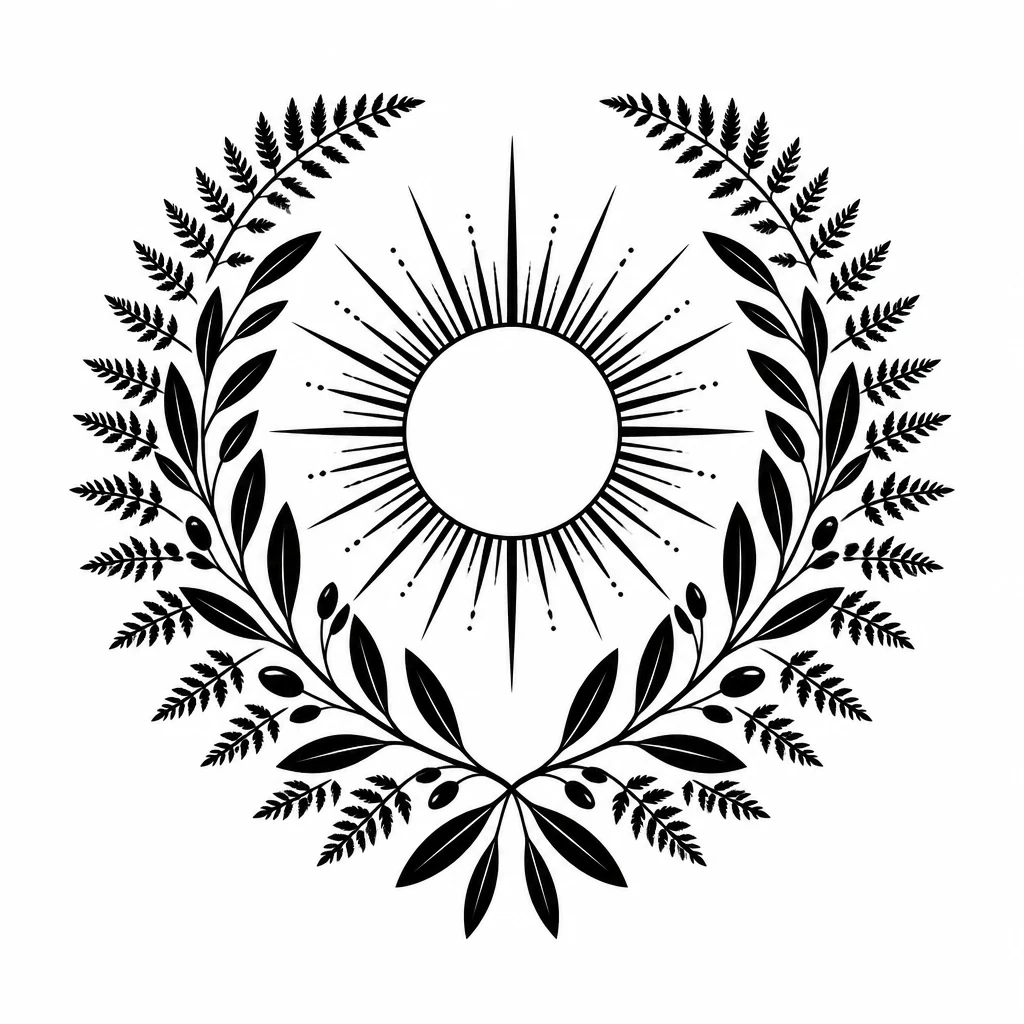
Blackwork can be immediate from across a room and rewarding at close range. A sun-and-fern wreath may first read as a strong dark silhouette, then reveal leaf cuts and ornamental patterns inside the form. A geometric sleeve may establish its rhythm through large bands while smaller dots soften the transitions. This ability to operate at several viewing distances makes blackwork especially powerful for medium and large compositions.
A broad family with deep roots
Black ink has been central to tattooing across cultures for centuries, and contemporary blackwork draws from many sources. Tribal and ceremonial tattoo traditions, woodcut illustration, engraving, folk ornament, calligraphy, sacred geometry, and modern graphic art have all contributed visual ideas. These influences should be approached with respect; culturally specific patterns are not simply decoration and may carry meanings or permissions that require research.
In modern studios, “blackwork” is an umbrella term rather than one fixed historical school. It can describe abstract blackout projects, botanical engraving, medieval creatures, ornamental body patterns, dark illustrative scenes, or geometric designs. The artist's personal vocabulary matters, so portfolios are essential when choosing someone for a particular direction.
Solid fill, line hierarchy, and negative space
The most recognizable blackwork tool is solid saturation. Large dark areas establish weight and make lighter details appear brighter. Good saturation should look consistent after healing, with edges that are intentional rather than accidental. Bold outlines often protect the silhouette and help complex forms remain readable.
Negative space is equally important. Open channels can separate veins in a leaf, cut light through a pattern, or create breathing room around a bold shape. These gaps must be large enough to survive natural softening over time. Very small skin breaks may close visually, so artists often simplify references and widen important openings.
Stippling and hatching offer a middle value between solid black and bare skin. They can create atmosphere, texture, and gradual transitions without introducing gray wash or color. The contrast system should remain organized: one focal dark mass, supporting mid-density texture, and clear open areas usually create a stronger design than evenly distributing detail everywhere.
Popular blackwork tattoo ideas
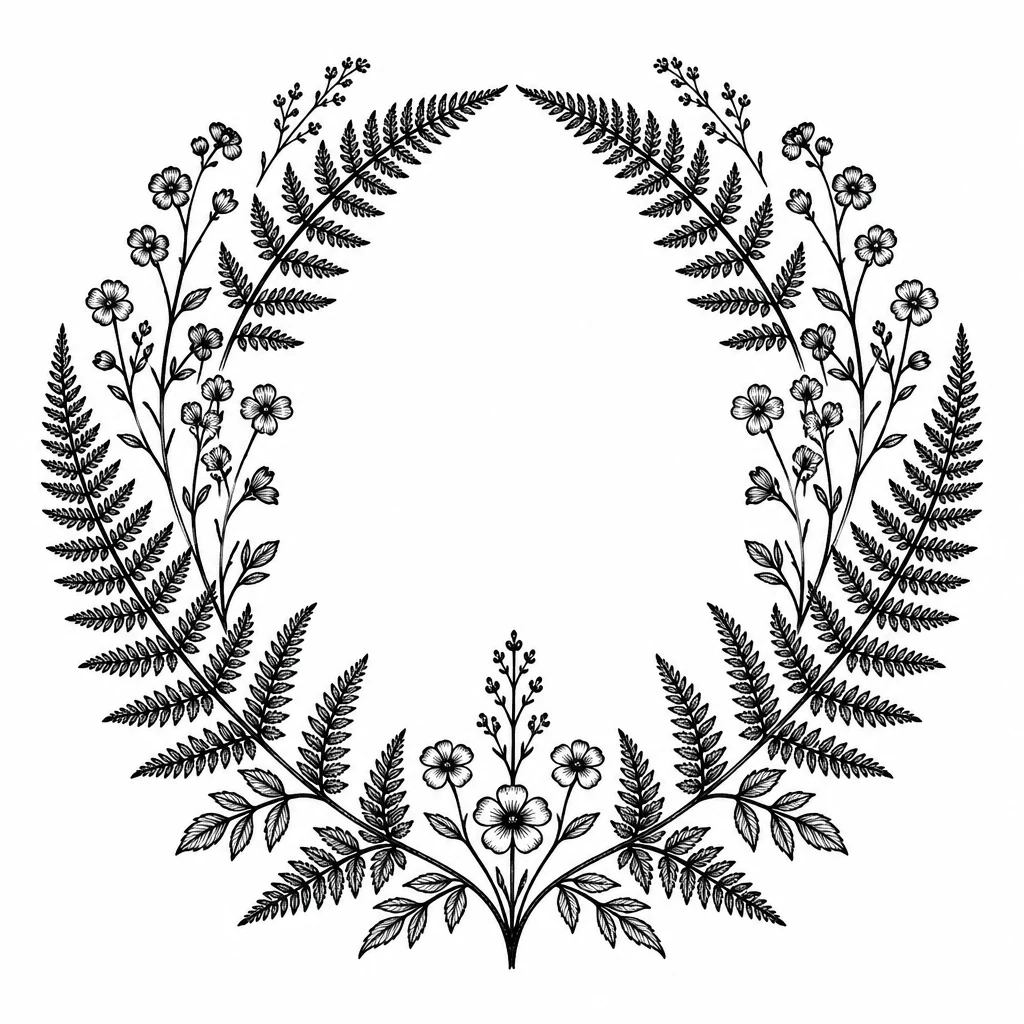
Botanical and geometric subjects are especially well suited to blackwork. Sun discs, fern wreaths, olive branches, peonies, mountains, and ornamental bands can support large black shapes while staying calm and readable. These motifs also frame limbs naturally and guide the eye along an arm or leg.
Ornamental blackwork uses repeating shapes, arches, filigree, and jewelry-like forms to follow the body. Geometric work may combine circles, grids, mandalas, and heavy bands. Dark illustrative tattoos borrow the mood of folklore, medieval prints, and gothic imagery, often featuring castles, armor, mythic creatures, or symbolic objects.
Abstract blackwork focuses less on named subjects and more on motion, balance, and anatomy. Brush-like marks or large flowing forms can wrap around the arm or leg. Because these designs are difficult to preview on a flat page, the artist may sketch directly over photographs or draw on the body before tattooing.
Designing for anatomy and scale
Blackwork has a strong relationship with body shape. A vertical creature can follow the forearm or calf, while a broad symmetrical form may suit the chest or upper back. Sleeves and leg pieces benefit from large directional flows that remain coherent when viewed from several angles. Small isolated blackwork tattoos also work, but their internal details should be limited.
Dense designs need breathing room around joints and natural landmarks. A dark band placed without considering movement can look rigid, while one shaped around the elbow or knee can feel integrated. Skin breaks can align with muscle lines and make a heavy design feel lighter.
Scale protects contrast. If an idea contains multiple black masses, textures, and interior cuts, enlarging it is often better than thinning every element. A bold, well-spaced design will generally communicate more clearly than a miniature copy of a complex reference.
Planning contrast and longevity
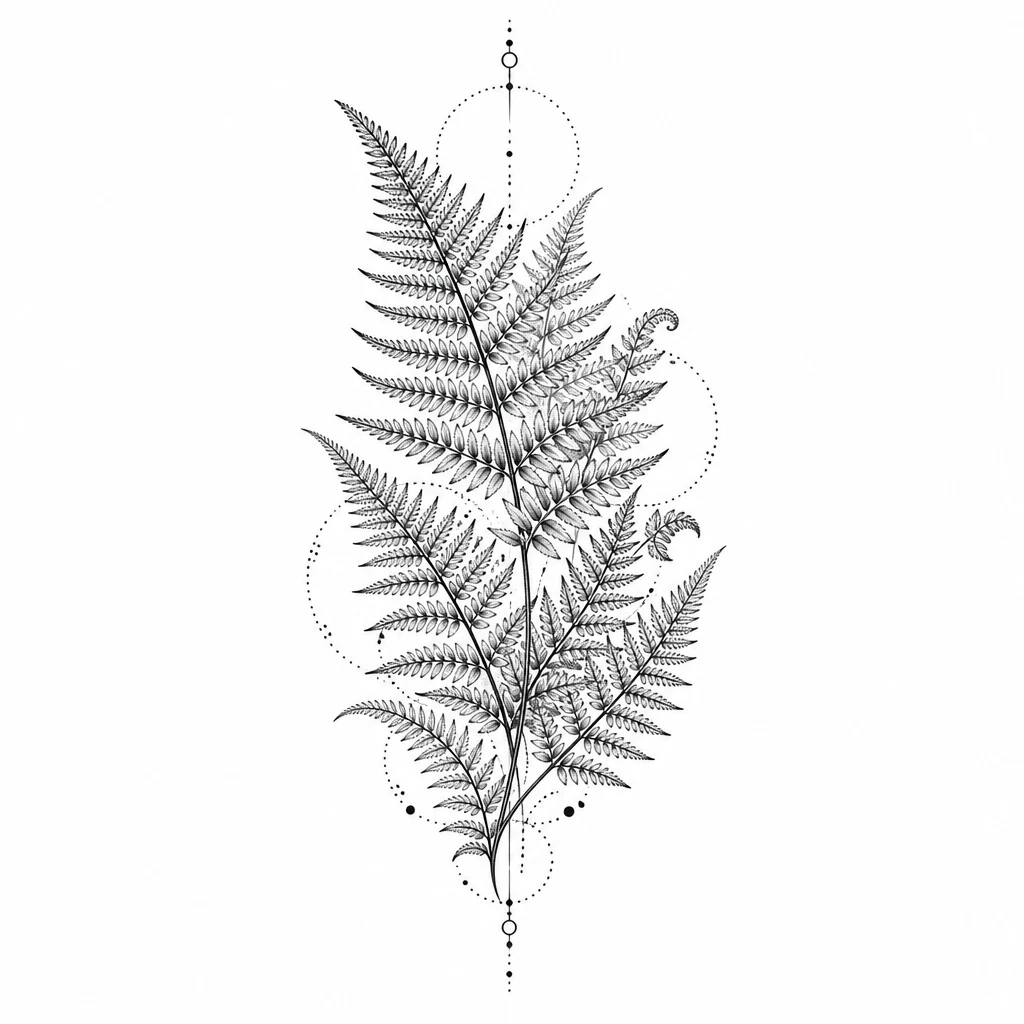
Begin by deciding what should read first. Is the focal point an animal's head, an ornamental center, or the overall silhouette? Build the darkest areas around that priority, then use open skin to separate supporting elements. Avoid giving every part the same density.
Blackwork often ages with strong presence because it uses high contrast and substantial marks, but that does not make planning optional. Tight lines can spread together, large fills can reveal unevenness, and unprotected tiny details may disappear. A specialist will adjust the design for skin type, placement, and the amount of black being applied in one session.
Creating a blackwork concept with the generator
Choose Blackwork and describe the subject, dark masses, negative-space cuts, and composition. A useful prompt might be “a radiant sun framed by broad fern leaves, bold blackwork silhouette, solid fills, crisp negative space, restrained stippling, vertical composition.” Avoid vague instructions such as “make it dark,” which do not explain where contrast should appear.
Review generated concepts in black and white and shrink them to test the silhouette. Look for a clear focal point and enough open space between major forms. Then bring the preferred direction to an artist who can redesign it for the exact placement and execute safe, even saturation. The strongest blackwork tattoo style pieces are not simply covered in ink; they use darkness and skin with equal intention.