Geometric Tattoo Style
What defines the geometric tattoo style?
The geometric tattoo style builds images through measured relationships: circles, lines, polygons, grids, repetition, symmetry, and controlled negative space. Some designs are purely abstract, while others construct animals, plants, or landscapes from recognizable geometry. Precision gives the style its immediate appeal, but successful work is not only technically straight. The proportions, rhythm, and relationship to the body must also feel intentional.
Geometric tattoos can be sparse and minimal or dense with interlocking patterns. A small design may use three aligned forms and one dotwork gradient. A large sleeve can move from solid black bands into mandalas, tessellations, and open line structures. In both cases, the viewer should be able to understand the hierarchy rather than seeing an undifferentiated field of detail.
Geometry as structure and symbolism
Artists and cultures have used geometry to describe order, nature, architecture, spirituality, and mathematical relationships for thousands of years. Contemporary tattooing draws inspiration from these sources as well as technical drawing, modern abstraction, optical art, digital design, and scientific diagrams.
Some forms carry widely recognized associations. Circles can suggest continuity or wholeness, triangles may imply direction or stability, and spirals can evoke growth and change. More specific constructions are sometimes described as sacred geometry. These patterns may have religious, philosophical, or cultural histories, so their context should be understood before they are used.
Not every geometric tattoo needs a fixed symbolic explanation. A wearer may value the calm of symmetry, the tension between order and organic life, or the way a pattern follows the body. Personal meaning can come from the complete composition rather than from a universal dictionary of shapes.
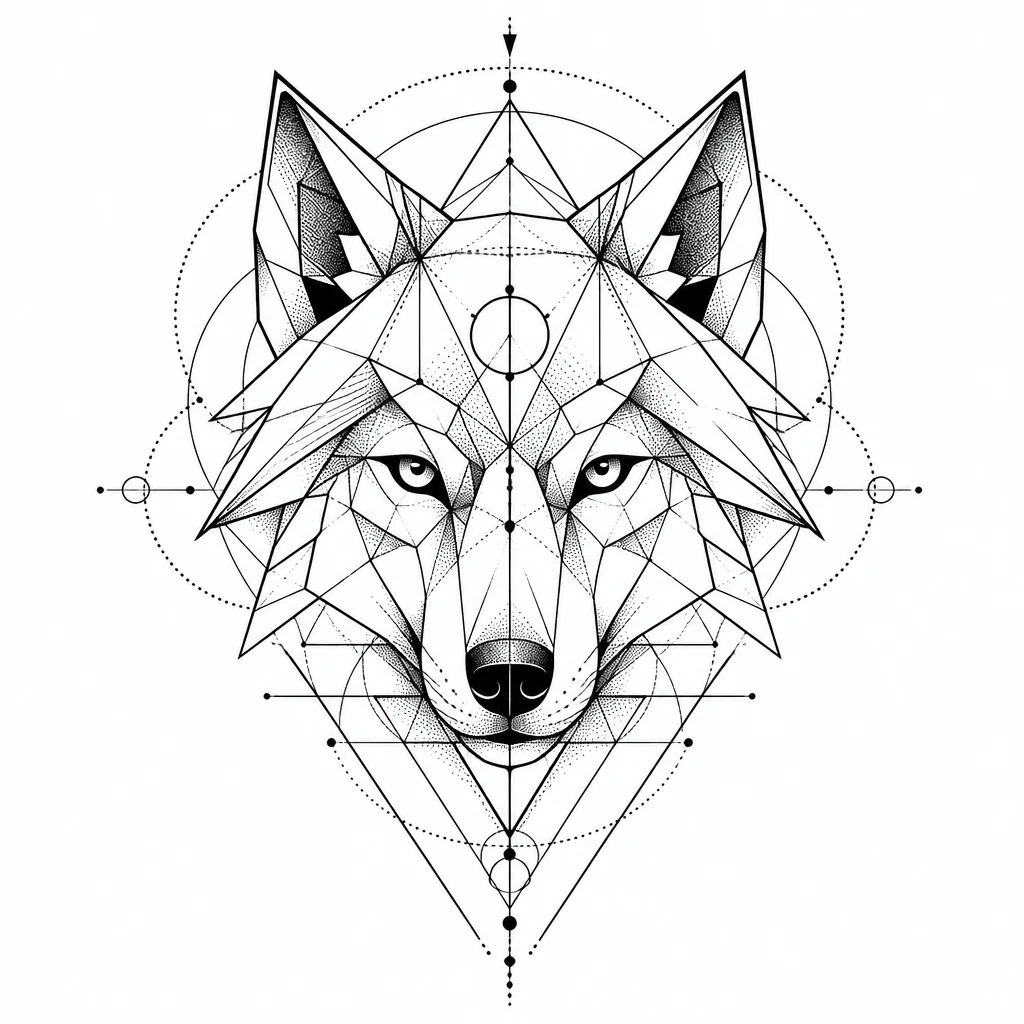
Symmetry, repetition, and line hierarchy
Symmetry creates an obvious center and makes small deviations visible. Artists often establish major axes first, then build secondary forms outward. Repeated distances and angles create rhythm. When a design wraps around a limb, apparent symmetry may need to be adjusted so it looks balanced from the primary viewpoint.
Line hierarchy prevents complex geometry from becoming flat. Stronger outlines can define the main shape, medium lines organize internal sections, and fine lines provide supporting construction. Dotwork introduces gradients without abandoning the precise character of the style. Solid black areas can anchor the design and give open patterns more contrast.
Negative space is not leftover background. It separates repeated forms, creates visual pauses, and protects readability as lines settle. A design with too many equally thin lines may look impressive on a screen but lose its hierarchy on skin. Simplifying selected areas often makes the geometry feel more exact.
Popular geometric tattoo ideas
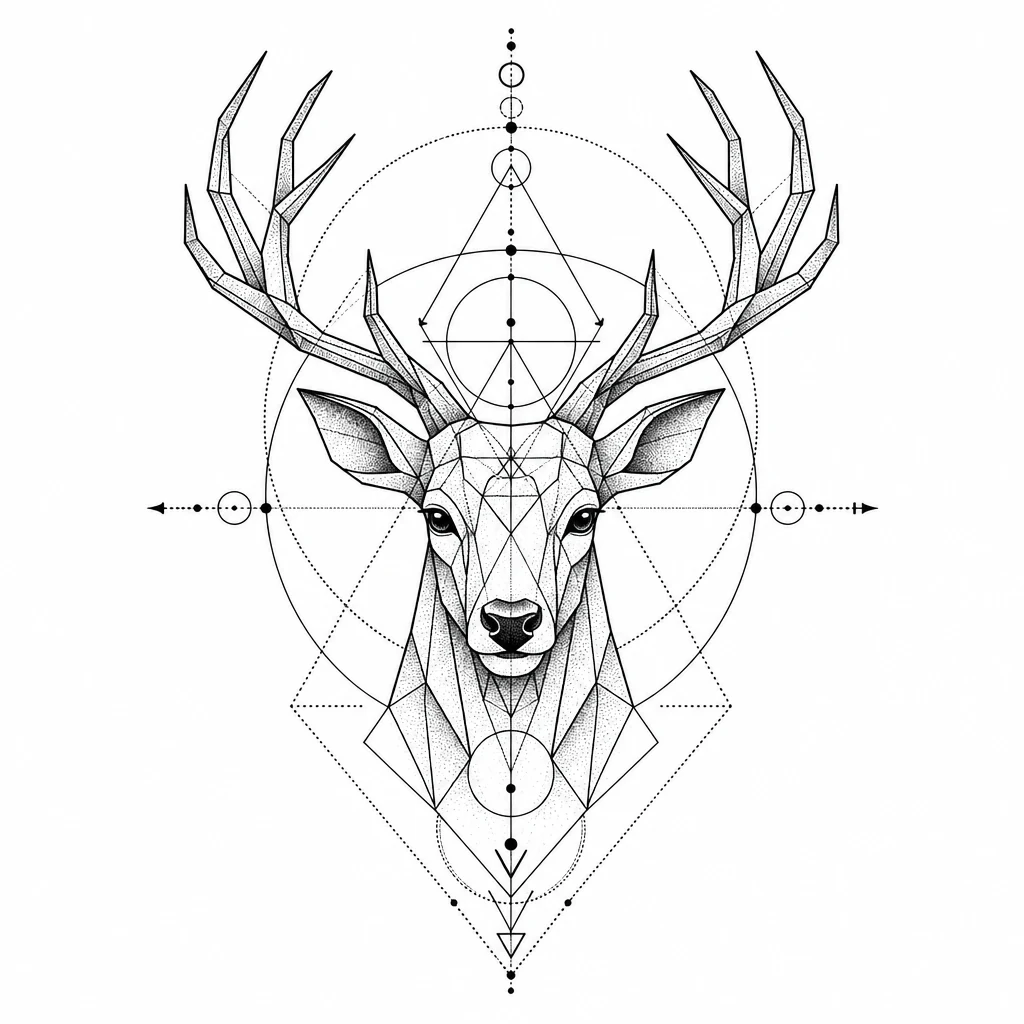
Animals are frequently combined with polygon structures because their silhouettes remain recognizable. Wolves, lions, stags, owls, bears, snakes, and insects can be divided into angular planes or framed by circles and diagrams. The strongest designs preserve a few organic features—such as eyes, antlers, or wings—while allowing geometry to organize the rest.
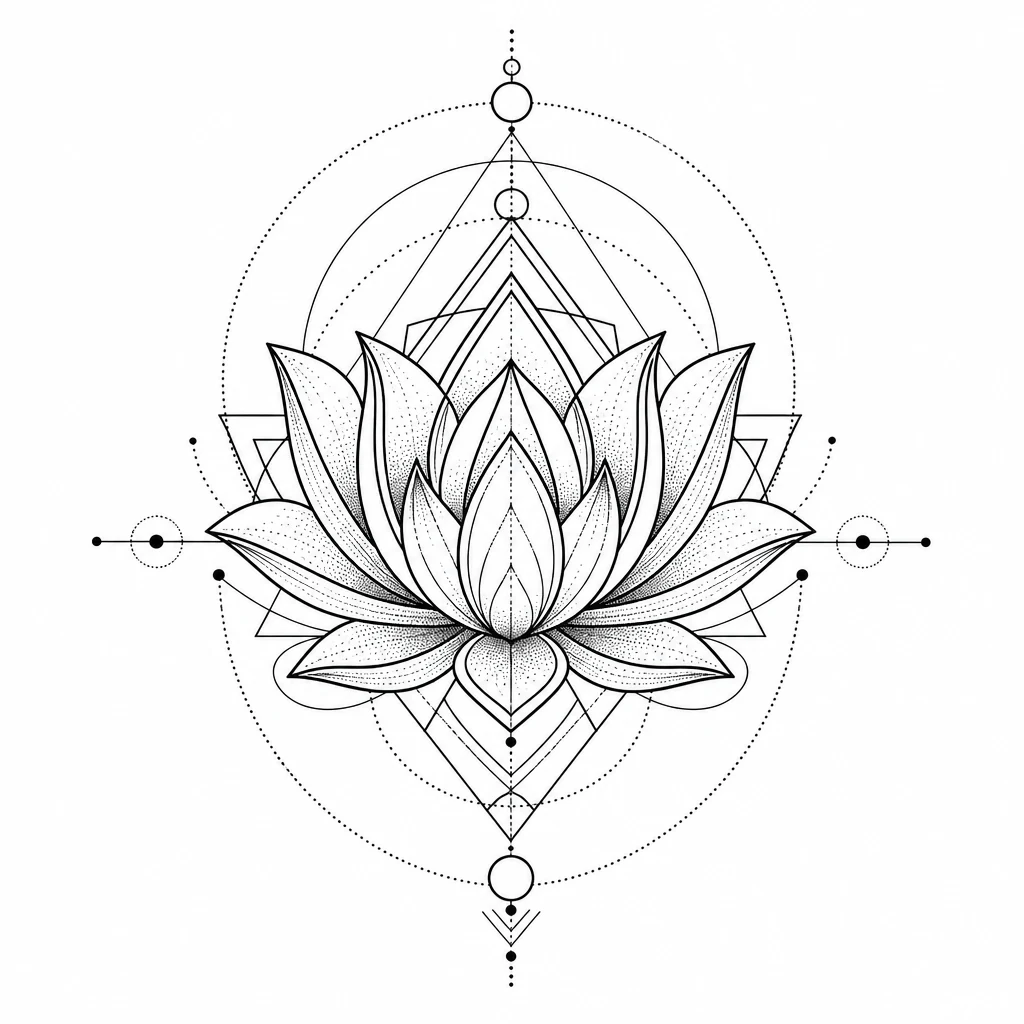
Mandalas and radial flowers use repeated petals and rings to create meditative balance. Bands and tessellations wrap naturally around arms and legs. Celestial diagrams combine orbits, phases, stars, and measured arcs. Landscapes can reduce mountains, water, and the sun to clean spatial relationships.
Hybrid designs introduce contrast. Half of an animal may be realistically drawn while the other half dissolves into polygons. A botanical form can grow through a strict grid. These combinations work best when one transition connects the languages instead of placing unrelated styles side by side.
Designing for the body instead of the screen
A perfectly flat digital pattern changes when it wraps around a forearm, shoulder, or calf. Good geometric tattooing accounts for that distortion. Artists may print several stencil versions, mark center lines, and check the design while the wearer stands naturally. A line that appears straight from one viewpoint may need a controlled curve to look correct on the body.
Flat areas such as the upper back, chest, and outer thigh support broad radial designs. Limbs suit elongated patterns, bands, and repeated structures that can wrap. The sternum and spine provide natural axes for symmetry, although breathing and posture still affect placement.
Scale depends on spacing. Dense dotwork and nested lines need enough room to remain separate. Enlarging a pattern or removing one ring is usually preferable to compressing every detail.
Precision, imperfection, and longevity
Geometric tattoos demand technical control because uneven spacing is easy to notice. Skin, however, is not graph paper. Texture, movement, and anatomy mean the goal is visual precision rather than mechanical perfection detached from the body. A skilled artist knows when a tiny adjustment improves how the design appears in motion.
Long-term clarity comes from confident line weight and realistic gaps. Very fine parallel lines can visually merge, and tiny dots can soften into a tone. The artist should protect the major geometry first, then add detail at a scale that can heal reliably.
Aftercare should minimize friction and stretching while the tattoo is fresh. Once healed, sun protection helps preserve the crisp contrast that makes geometric work compelling.
Creating a geometric tattoo concept
Define the focal form, degree of symmetry, and overall silhouette before listing individual patterns. Decide whether the result should feel minimal, ornamental, architectural, or organic. Mention the intended placement because a vertical forearm design requires different movement from a centered chest piece.
In the generator, choose Geometric and try “a forward-facing stag with branching antlers, precise geometric tattoo style, centered vertical symmetry, circles and measured triangles, restrained dotwork shading, generous negative space.” Inspect whether the primary silhouette remains readable and whether repeated shapes have a clear rhythm.
Use the generated concept to communicate direction, then let a geometric specialist rebuild the measurements and stencil for your anatomy. The best geometric tattoo style designs combine exact visual logic with the living curves of the body, creating order that feels designed for its placement rather than applied on top of it.