Minimalist Tattoo Style
What is the minimalist tattoo style?
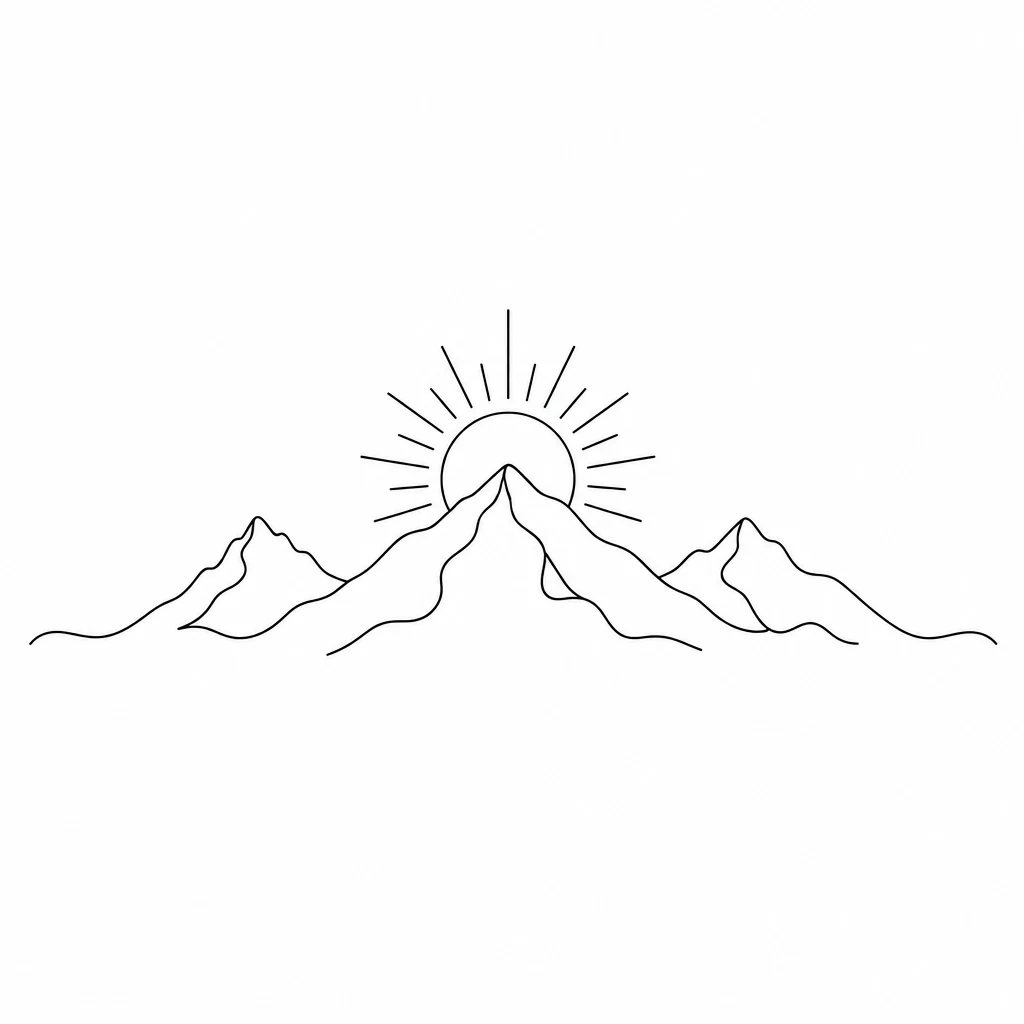
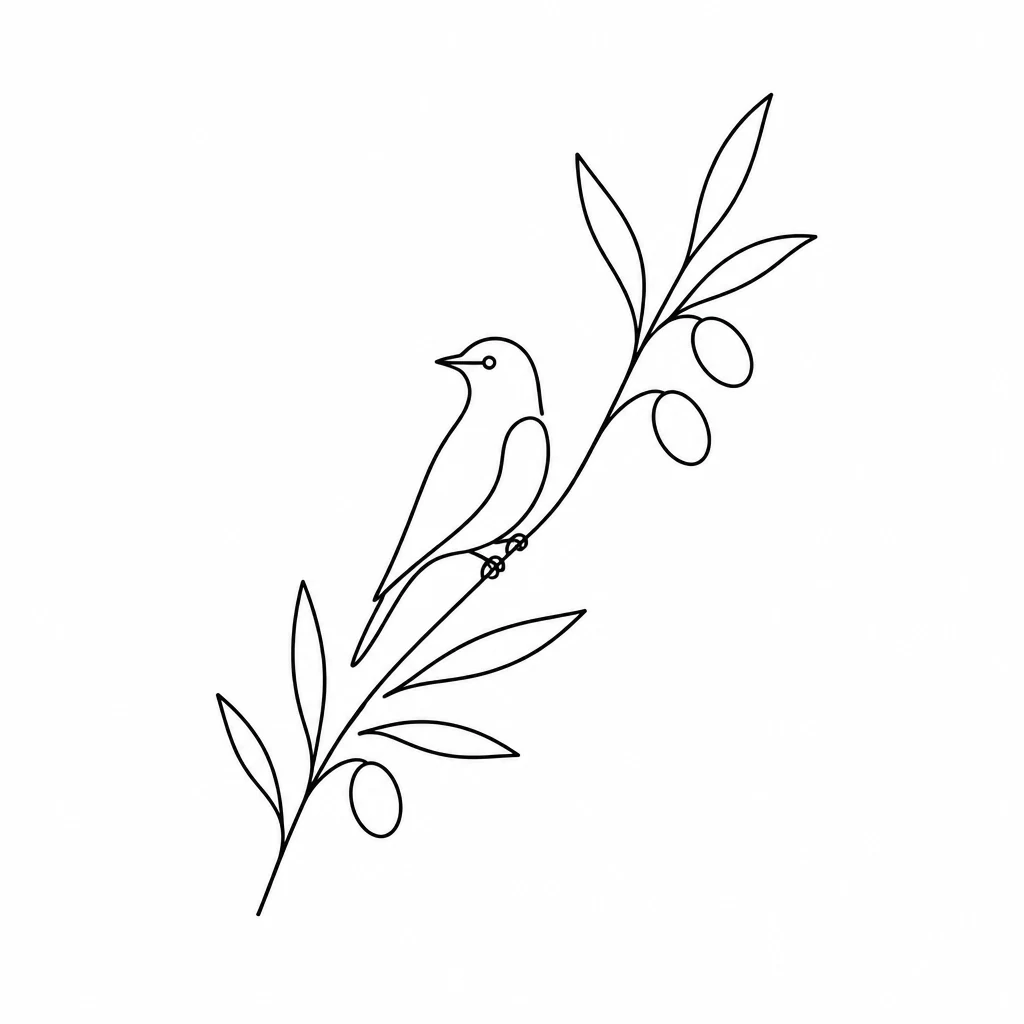
The minimalist tattoo style expresses an idea with the fewest visual elements needed to make it recognizable. It favors clean contours, simple geometry, controlled spacing, and a clear focal point. A mountain may become two angled lines beneath a circle. A bird may be reduced to a single flowing gesture. The goal is not to make a design empty; it is to remove anything that does not contribute to meaning or structure.
This approach appeals to people who value subtlety, versatility, and images that can be understood at a glance. Minimalist tattoos can mark an important memory, represent a personal principle, or simply celebrate a form the wearer finds beautiful. Their apparent simplicity makes them easy to live with, but strong minimalist work depends on careful editing and accurate execution.
Minimalism as a design philosophy
Minimalist tattooing draws influence from modern graphic design, abstract art, pictograms, continuous-line drawing, and traditional symbols that have always used economical shapes. Its growth also reflects a wider interest in smaller, more discreet tattoos. Yet the style is more than a social-media trend. Reduction has long been one of the most powerful ways to create memorable visual language.
The central question is: what can be removed without losing the subject? An artist may simplify overlapping petals, straighten an unnecessary curve, or combine several details into one silhouette. This process creates a design that reads quickly and can remain clear as it ages.
Minimalist does not mean generic. Two designs can contain the same three elements and feel completely different depending on their proportions, rhythm, and relationship to the body. Originality comes from choosing meaningful forms and arranging them with intention.
Line, shape, and the role of empty space
Many minimalist tattoos use a consistent black line with little or no shading. Others combine a thin outline with one compact solid shape, such as a dark sun, leaf, or wave. Geometric forms are common because circles, triangles, and arcs organize a composition efficiently, but organic lines can feel equally minimal when they remain controlled.
Empty space is an active part of the image. It separates forms, creates calm, and lets the skin complete shapes that are only partially drawn. A broken circle can still feel whole, and two distant marks can imply a horizon. Good spacing also supports longevity by keeping separate lines from visually merging over time.
Color is usually limited. Black offers the clearest contrast, while one muted accent can add emotional weight. A small red circle beside a black mountain, for instance, can suggest sunrise without adding literal scenery.
Popular minimalist tattoo ideas and symbols
Landscape symbols are especially effective: mountains, waves, suns, moons, stars, and trees translate naturally into simple profiles. Animals can be represented through a distinctive outline, footprint, wing, or continuous gesture. Plants, constellations, coordinates, and abstract family symbols are also frequent choices.
The strongest idea is often specific to the wearer. Instead of a generic airplane, the design might trace the wing profile of an aircraft connected to a meaningful journey. A pet tattoo may focus on a recognizable ear shape or posture. A flower can be reduced to the curve of its stem and the number of petals associated with a memory.
Words and dates can be included, but typography should remain readable and should not depend on extremely tiny strokes. Often, an image communicates more gracefully than a long phrase. If text is essential, keep it short and allow enough size for the letterforms to remain distinct.
Choosing size and placement
Minimalist designs work across many areas of the body because their silhouettes are adaptable. The inner forearm, upper arm, ankle, calf, shoulder blade, ribs, and back of the arm are common placements. A narrow vertical design can follow a limb, while a compact symbol can sit comfortably in a small open area.
Small does not mean microscopic. Reducing a detailed reference until every feature is tiny will not create minimalism; it creates a crowded small tattoo. Simplify first, then choose a size that gives every remaining line space to settle. High-friction areas such as fingers and feet may need bolder marks and even fewer elements.
Placement can reinforce meaning. A wave that follows the ankle may suggest movement, while a horizon aligned with the forearm feels calm and steady. Consider how the image looks both when the body is relaxed and when it moves.
Minimalist versus fine line tattoos
The two styles overlap, but they are not identical. Fine line describes a delicate method and visual weight; minimalist describes how much information the design contains. A fine line portrait can be highly detailed, while a minimalist symbol may use a relatively bold outline. A tattoo can be both when it combines a reduced subject with delicate execution.
Knowing the distinction helps when communicating with an artist. If your priority is simplicity, describe the essential forms you want to preserve. If your priority is delicacy, discuss line weight and shading. When both matter, be prepared to increase the size slightly so the design does not become too fragile.
Building a clear minimalist tattoo concept
Start with one sentence about what the tattoo should represent. List the two or three visual features that make the subject identifiable, then remove decorative elements that repeat the same message. Decide whether the mood should feel calm, playful, balanced, or dynamic. That emotional direction will influence curves, angles, and spacing.
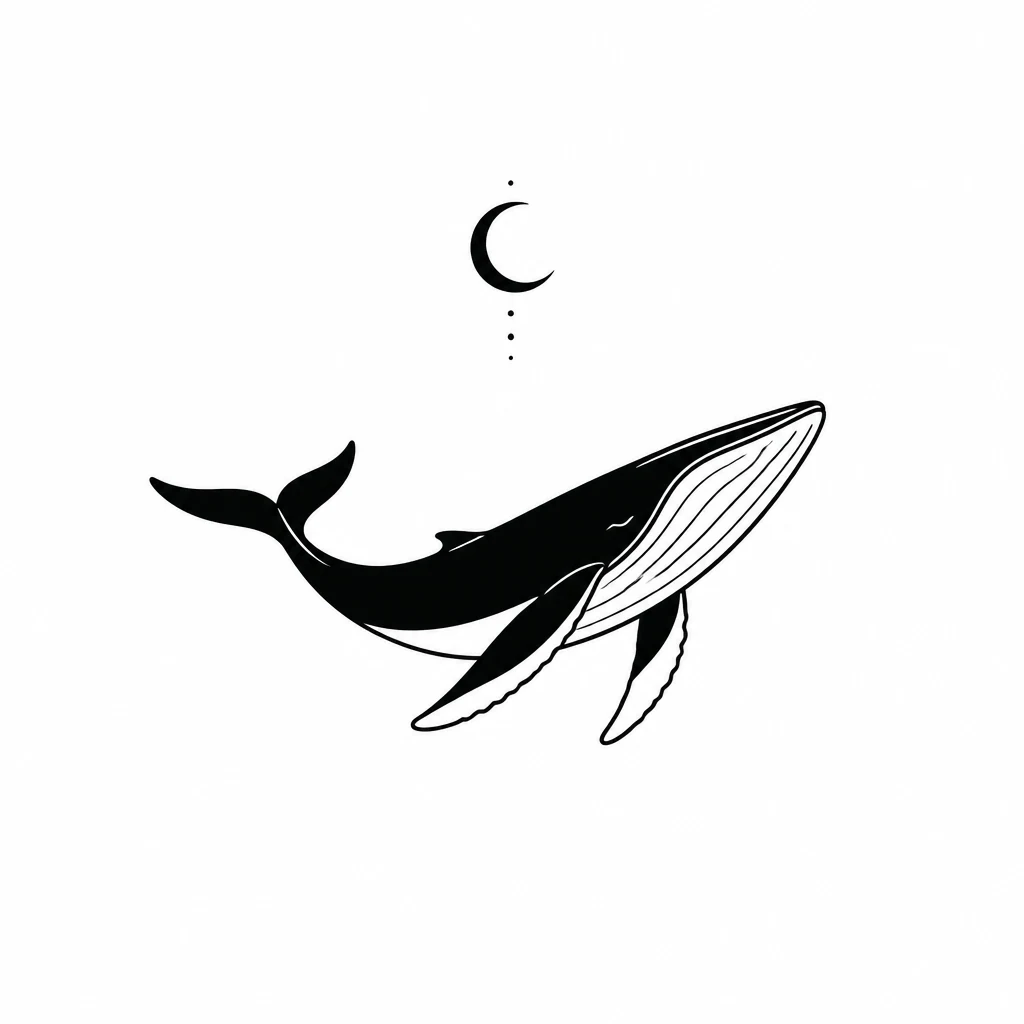
In the tattoo generator, select Minimalist and use a prompt such as “a whale beneath a crescent moon, reduced to clean black contours, one small solid circle, balanced negative space, no shading.” Compare results by silhouette rather than by the number of details. A successful concept should still be recognizable as a small thumbnail.
Treat the generated image as a starting brief. A tattoo artist will refine line thickness, scale, and placement for the body. The best minimalist tattoo style designs look inevitable: every line supports the idea, every gap creates breathing room, and nothing feels added merely to make the image busier.