Traditional Tattoo Style
What defines the traditional tattoo style?
The traditional tattoo style, often called American traditional or old school, is recognized by bold black outlines, simplified shapes, compact shading, and a limited palette of strong colors. Every element is designed for readability. A rose has a clear outer shape, a panther bends into an unmistakable pose, and an eagle's wings are organized into broad sections rather than hundreds of tiny feathers.
Traditional tattoos can look direct, but their simplicity is highly refined. Artists balance black, color, and open skin so the image remains lively without becoming crowded. The style works equally well as a palm-sized piece of flash or as a collection of separate tattoos that gradually forms a sleeve.
Origins of American traditional tattooing
The style grew through Western tattooing in the late nineteenth and early twentieth centuries, with sailors, travelers, soldiers, circus artists, and working communities helping circulate its symbols. Early equipment and pigments encouraged designs with strong lines and economical color. Flash sheets let artists display repeatable images that could be selected and tattooed efficiently.
Influential tattooers developed a visual shorthand that connected personal stories to recognizable motifs. Ships, anchors, swallows, hearts, eagles, snakes, roses, daggers, and pin-up figures carried ideas about travel, loyalty, danger, love, courage, and home. Meanings were never perfectly universal, but the shared vocabulary made the tattoos easy to read.
Modern traditional artists preserve those structural lessons while expanding the subjects and representation found in the style. The result can honor the past without turning every design into a historical replica.
Bold linework and a limited palette
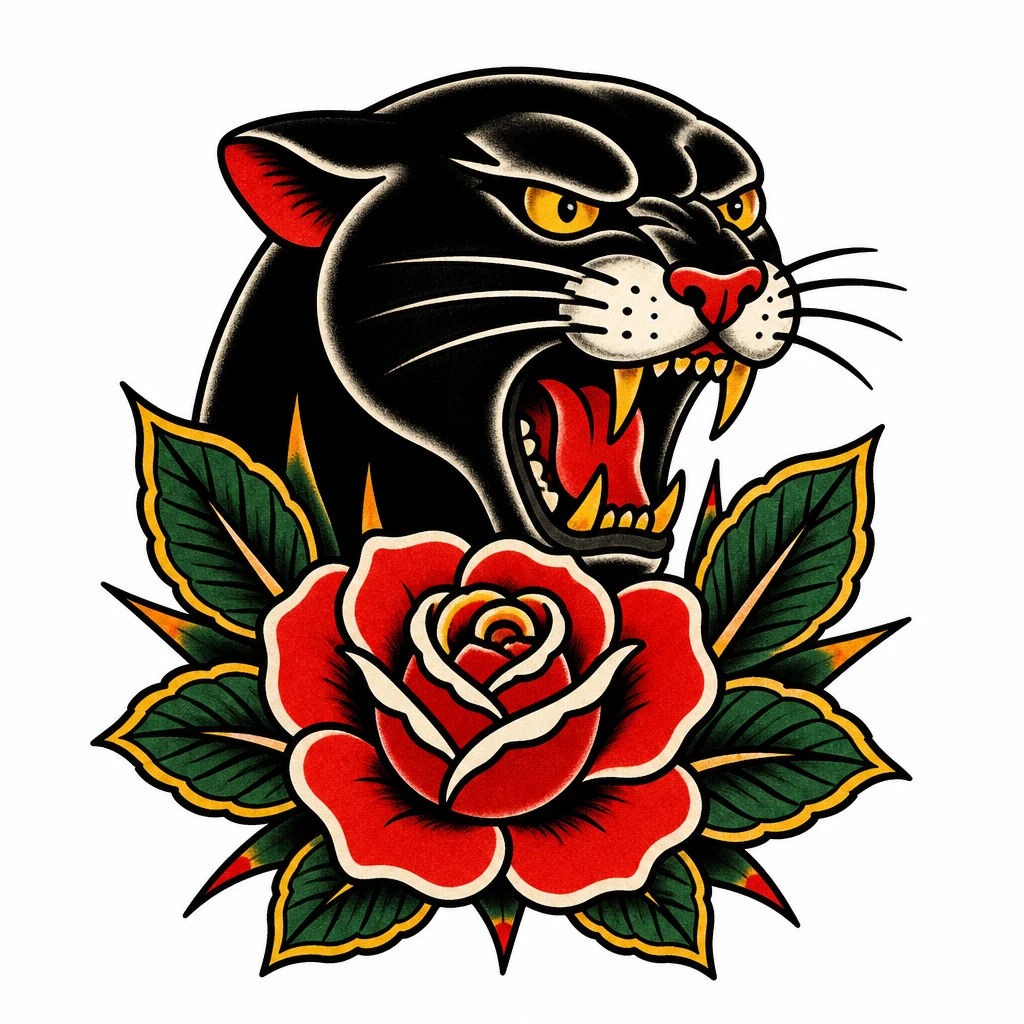
The outline is the backbone of a traditional tattoo. It is usually consistent and substantial enough to contain the shapes as the tattoo ages. Interior lines are used selectively. Instead of describing every texture, they identify the features that make the subject recognizable.
Black shading creates depth and anchors the composition. It is often applied in compact gradients or solid areas, leaving deliberate skin breaks before color begins. This separation keeps colors clean and gives the design contrast. Classic palettes commonly feature red, yellow, green, and blue, sometimes with brown or purple accents. Restricting the palette makes different motifs feel related and keeps attention on the main shapes.
The rule is not that every traditional tattoo must use the same colors. Black-and-gray traditional work can be effective, and artists may adjust a palette for the wearer's skin tone or preferences. What matters is that the color plan remains simple, saturated, and organized.
Classic motifs and their appeal
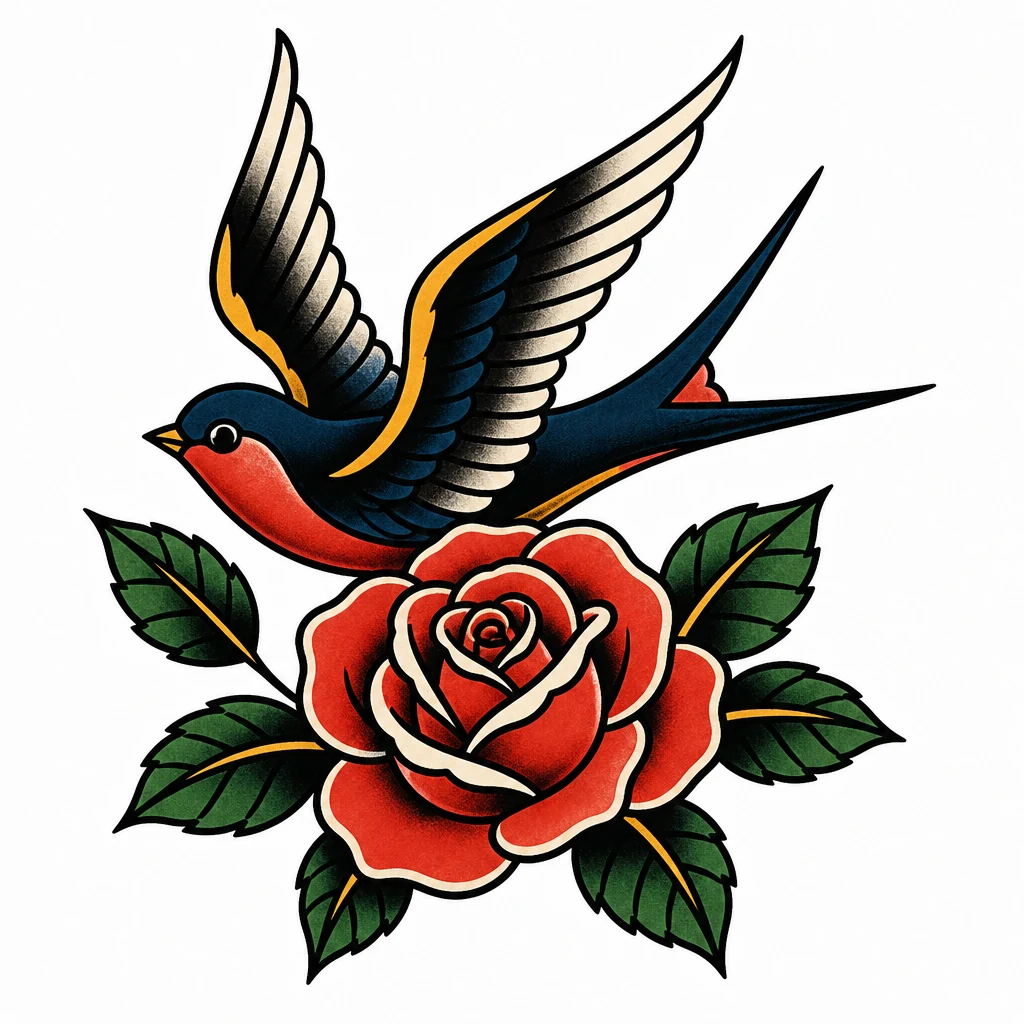
Animals are central to traditional flash. Eagles suggest freedom or strength; panthers communicate power and readiness; snakes can represent danger, transformation, or protection. Swallows are associated with travel and return, while wolves, tigers, sharks, and horses bring their own recognizable energy.
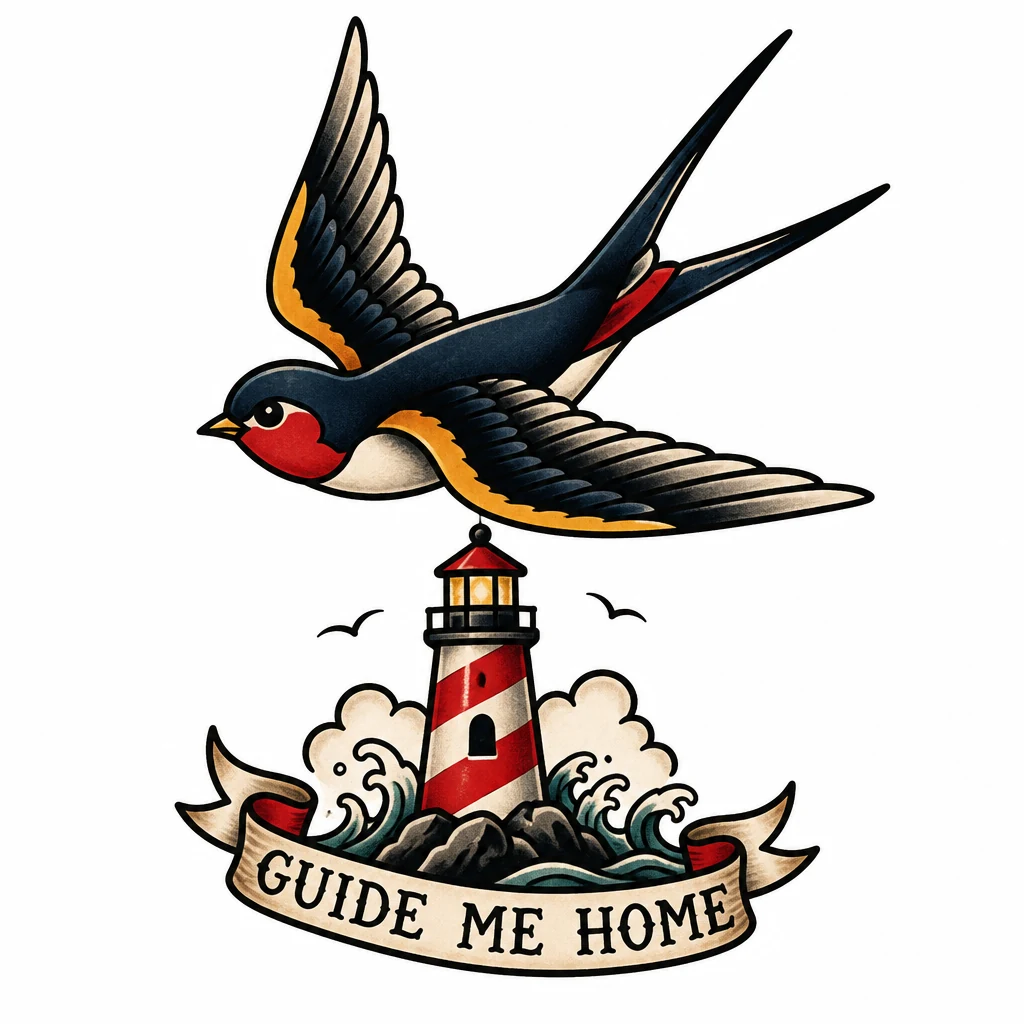
Nautical symbols such as anchors, ships, ropes, and lighthouses connect naturally to the style's history. Roses, hearts, banners, daggers, torches, lucky symbols, and sacred imagery are used alone or combined into compact stories. A dagger through a rose can place beauty and hardship in the same image. A lighthouse with a swallow may suggest guidance and homecoming.
The subject does not need a fixed dictionary definition. Personal context matters more than repeating a legend from a flash book. The advantage of classic motifs is that their forms have been tested through generations of tattooing.
Flash composition and placement
Traditional designs are often composed as self-contained pieces with a strong silhouette. A diagonal dagger fits the forearm, a round rose sits naturally on the shoulder, and a climbing panther can follow the calf. The artist may exaggerate a curve or rotate a wing so the image works with the chosen area.
For a patchwork sleeve, spacing between tattoos is part of the overall look. Each piece needs enough room to keep its outline distinct. Small stars, dots, or simple filler can be added later, but strong collections do not require every area of skin to be filled.
Larger traditional back pieces and fronts combine several motifs into one hierarchy. A central animal or ship may carry the story, with flowers, clouds, and banners supporting its movement. Even at that scale, the image should remain readable from a distance.
Traditional versus neo-traditional design
Neo-traditional tattooing builds on bold outlines and iconic subjects but permits more detail, dimensional shading, decorative influence, and varied color. Faces may be more modeled, flowers more layered, and line weights more diverse. Traditional work usually stays flatter and more economical.
Neither approach is inherently better. Choose traditional when you want graphic clarity, a classic flash character, and a design that speaks through strong shapes. Choose neo-traditional when you want the same foundation with greater realism or ornament. Showing an artist references from the correct category prevents confusion.
Creating timeless traditional tattoo ideas
Start with one main symbol and decide what it should communicate. Add only supporting elements that strengthen the story or improve the shape. Think in terms of a clear silhouette, bold outline, black shading, and three or four colors. A concise prompt might be “an eagle gripping a dagger above a red rose, American traditional tattoo flash, bold black outlines, compact black shading, limited red, yellow, green, and blue palette.”
Select Traditional in the generator and compare results by readability. If the design loses its identity as a thumbnail, simplify the overlap or remove an element. The final tattoo artist should redraw the concept, tune the palette, and shape it for the placement. Traditional tattoo style endures because it turns complex emotions into clear, confident images built to remain legible.