Japanese Style Tattoo
What makes a Japanese style tattoo distinctive?
A Japanese style tattoo is more than a collection of recognizable symbols. It is a system for arranging figures, flowers, wind, water, clouds, rocks, and open skin into a composition that moves with the body. Large subjects remain readable because the background connects them and establishes direction. A koi does not simply float beside a peony; waves carry the fish through the design while the flower sets a season and emotional tone.
This relationship between subject and environment gives Japanese tattooing its visual power. Strong outlines protect the main forms, deliberate color separates layers, and repeated background rhythms unify an arm, leg, back, or torso. Even a smaller Japanese-inspired piece benefits from the same discipline: one clear subject, meaningful supporting elements, and a flow that respects anatomy.
Tradition, irezumi, and contemporary practice
Tattooing in Japan has a complex history that includes ancient body marking, decorative practices of the Edo period, punishment, labor communities, woodblock-print influence, and long periods of stigma. The word irezumi literally refers to inserting ink and is often used broadly in English, while Japanese practitioners may use more specific terms for tattooing and traditional methods.
The imagery many people associate with Japanese tattoo style developed alongside ukiyo-e woodblock prints, illustrated heroes, folklore, theater, religion, and observations of the natural world. Full-body compositions could be planned like clothing, with deliberate borders and areas of untouched skin.
Contemporary artists work with electric machines, traditional hand methods, or both. Some follow established compositional rules closely; others combine them with modern illustration. Respect begins with recognizing that this is a living cultural practice, not simply an exotic aesthetic. A knowledgeable artist can explain the origins and appropriate pairing of motifs.
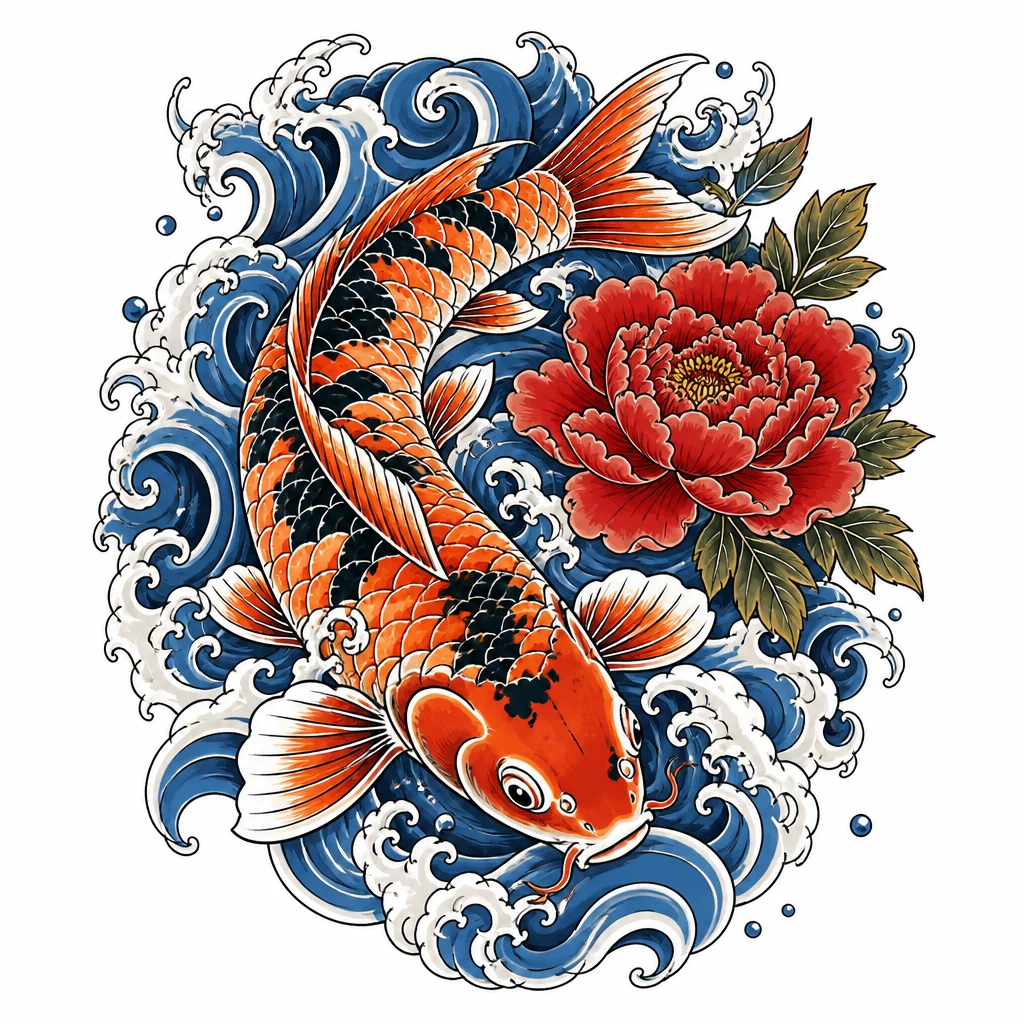
Flowing backgrounds and readable structure
Background is fundamental. Wind bars curve around muscles and direct the eye. Waves rise, break, and repeat through the composition. Clouds create separation around dragons or deities, while rocks and water establish a grounded landscape. These elements fill space without feeling like arbitrary decoration.
The design usually has a clear hierarchy. A large primary figure receives the strongest silhouette. Flowers and secondary objects frame it without competing for attention. Background patterns use smaller rhythms and darker values to push the focal subject forward. Open skin acts as light and prevents the composition from becoming visually heavy.
Traditional drawing often uses decisive black outlines, but line weight may vary between the focal subject and the background. Black-and-gray shading can be combined with saturated color. The palette is organized so adjacent shapes remain distinct when seen from a distance.
Japanese tattoo motifs and meanings
Koi are associated with perseverance, transformation, and movement against difficulty, partly through stories of carp overcoming powerful currents. Dragons can represent wisdom, protection, strength, and control over natural forces. Tigers communicate courage and may be shown with wind, bamboo, or rocks. Snakes can suggest renewal, protection, or the unpredictable power of nature.
Mythic birds, lions, masks, warriors, and folklore figures introduce more specific narratives. Hannya masks are visually striking but should be understood in relation to theater and the complex emotions they represent. Deities and sacred figures deserve particular care and informed discussion.
Flowers establish beauty, impermanence, resilience, and season. Peonies are lush and powerful; chrysanthemums connect with autumn and longevity; cherry blossoms emphasize the brief nature of life; lotus flowers suggest purity and spiritual development. Maple leaves, bamboo, pine, and other plants contribute both meaning and compositional rhythm.
Pairings should make seasonal and narrative sense. An experienced artist may advise against combining every favorite motif if their settings conflict or weaken the story.
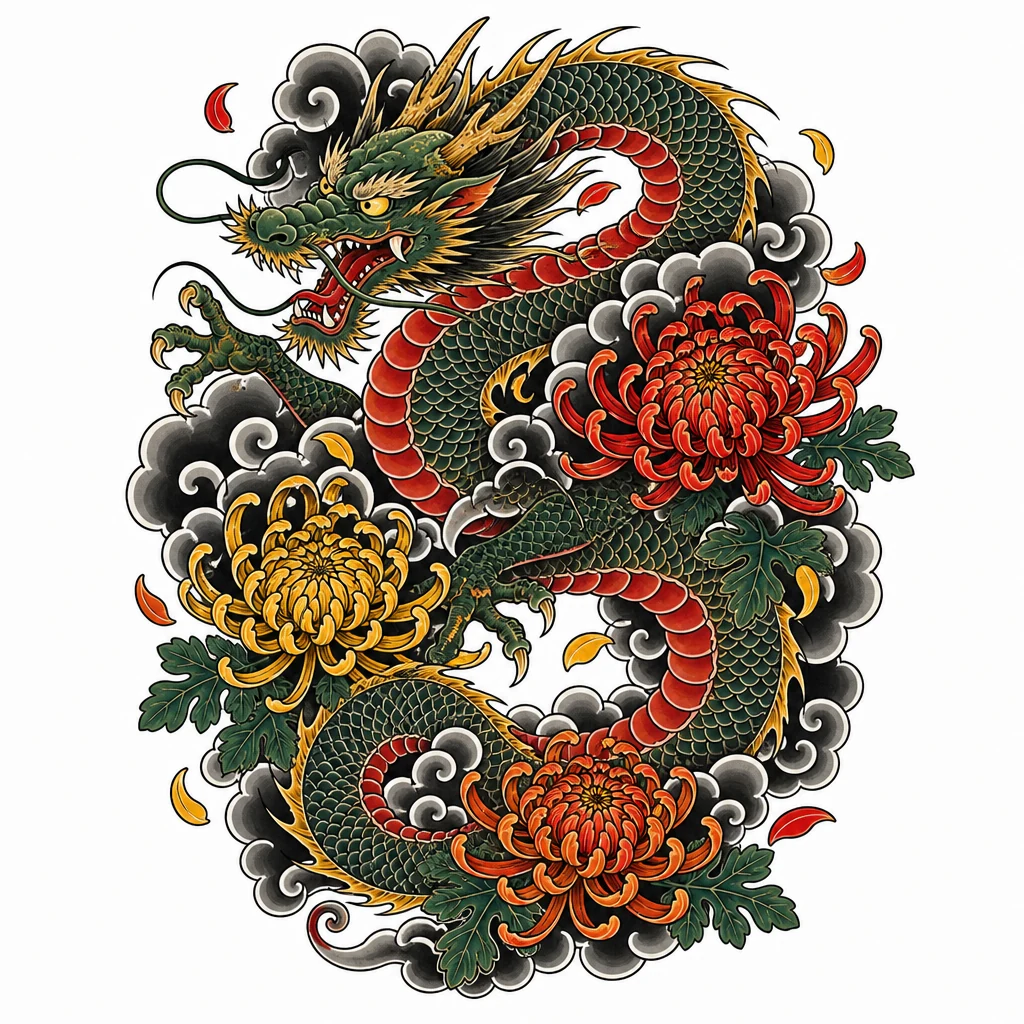
Color, black and gray, and visual mood
Classic Japanese tattoo palettes often use strong red, yellow, blue, green, and black. Color areas are substantial enough to remain clear, and repeated hues help connect distant parts of a sleeve or body suit. Warm flowers can contrast with cool water, while a limited accent color may direct attention to the face of the primary subject.
Black-and-gray Japanese work can be equally dramatic. Without color, the artist relies on value separation, skin breaks, and varied textures to distinguish scales, fur, petals, and background. The decision should support the story and the wearer's preferences rather than follow a rule that every Japanese tattoo must be brightly colored.
Planning sleeves, back pieces, and smaller designs
Large-scale Japanese tattooing is often planned as a complete composition from the beginning. Sleeves consider the shoulder cap, elbow, wrist boundary, and the views from front and back. Back pieces use the broad central area for a major scene and extend supporting movement toward the shoulders, ribs, or thighs. Leg pieces can spiral around the calf and thigh using water or wind to connect changing angles.
Planning early prevents isolated motifs from blocking future flow. If you may eventually want a sleeve, tell the artist before placing a small piece in the middle of the available space. Borders and background can then be designed with expansion in mind.
For a smaller tattoo, choose one subject and one environmental cue: a koi with a single wave, a tiger head with two maple leaves, or a chrysanthemum framed by wind. Simplification preserves the character of the style better than shrinking an entire back-piece scene.
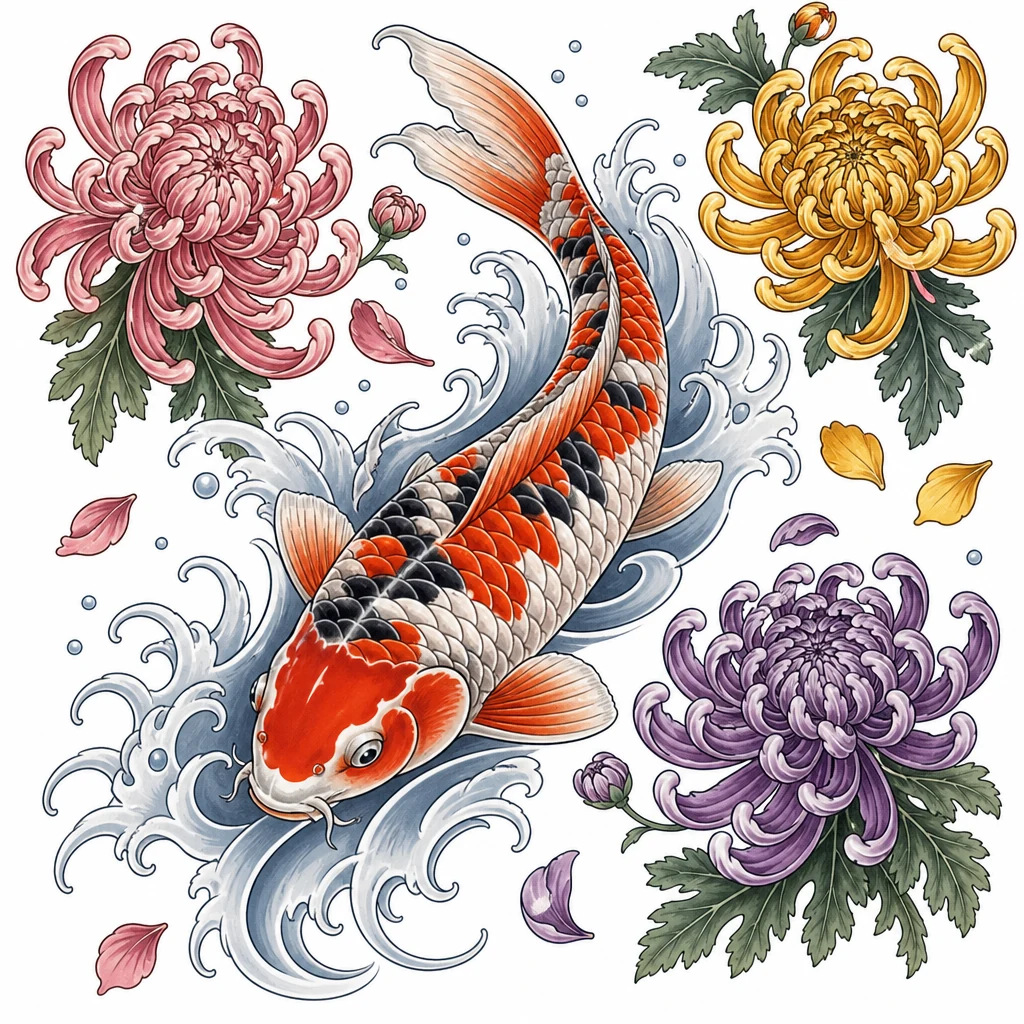
Creating a coherent Japanese tattoo concept
Begin with the central subject and the quality you connect to it. Choose a season, supporting flower, and environmental movement that reinforce the meaning. Describe the intended body area and whether the composition should climb, wrap, or spread horizontally.
In the generator, select Japanese and try a prompt such as “a powerful tiger descending through curved wind bars with autumn maple leaves, Japanese tattoo style, bold readable outlines, balanced black and warm red, vertical composition.” Avoid requesting unrelated symbols simply because they are individually popular.
Use generated images to discuss hierarchy and movement, not as a final stencil. A specialist should redraw the anatomy, verify the cultural context, and fit every background curve to the body. The most successful Japanese style tattoo feels like one continuous environment in which symbolism, season, and motion all support the same story.